
Why a Skilled Tree Climber Matters for Tree Work
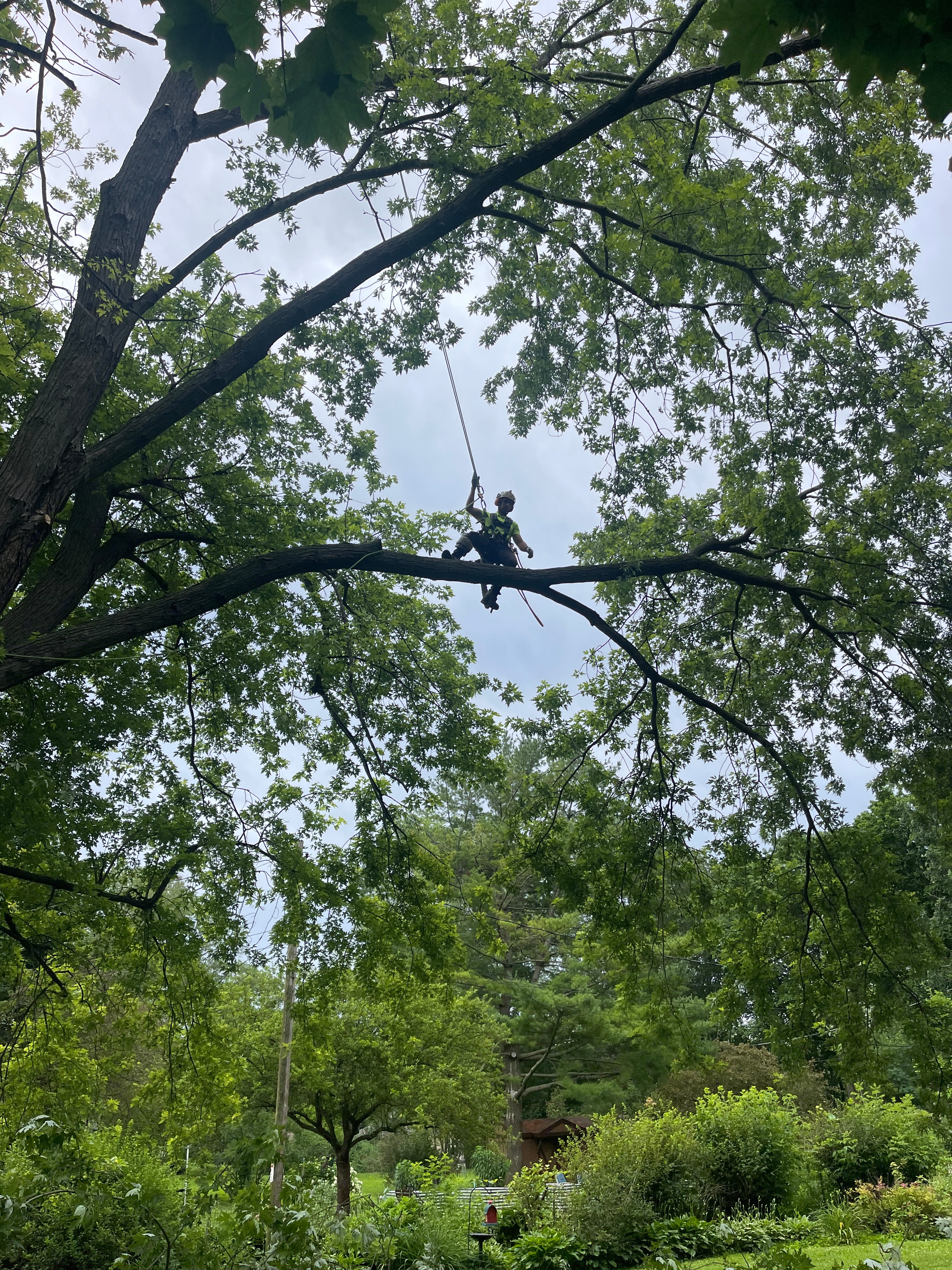
Why a Skilled Tree Climber Matters for Tree Work
When most people think about tree service, they picture chainsaws, trucks, and maybe a chipper. What many homeowners do not realize is that some of the most important work happens high above the ground. That is where a skilled tree climber comes in.
In Southeast Wisconsin, where mature oaks, maples, and large shade trees are common in residential neighborhoods, there are many situations where heavy equipment simply cannot do the job. Tight backyards, trees close to homes, and limited access often require a trained climber to safely handle the work.
A good tree climber brings experience, control, and careful planning to every cut. Without that skill, tree work becomes far more dangerous for both the crew and the property below.
What Does a Tree Climber Actually Do?
A tree climber is responsible for working directly within the tree canopy. Using ropes, harnesses, and specialized climbing systems, they move through the tree while removing limbs, trimming branches, or dismantling sections of the tree piece by piece.
This type of work requires a mix of physical ability, technical knowledge, and constant awareness of safety.
Typical responsibilities include:
• Climbing and positioning safely in large trees
• Rigging and lowering heavy limbs in controlled sections
• Pruning branches for health and structure
• Removing hazardous trees near structures
• Working in areas where lifts or cranes cannot reach
It is not simply about getting up the tree. It is about doing the work safely and with full control over every piece that comes down.
When a Tree Climber Is Necessary
Not every tree job requires a climber. Sometimes a bucket truck or lift can handle the work. But in many residential neighborhoods across Southeast Wisconsin, access is limited.
Here are a few situations where a professional climber becomes essential.
Trees Close to Homes or Structures
When a tree grows near a house, garage, or fence, dropping large limbs is not an option. Pieces need to be carefully cut and lowered using rigging systems.
A skilled climber can control each section as it comes down, protecting everything underneath.
Tight Backyard Access
Many properties in Milwaukee County and Racine County have fenced yards, landscaping, or narrow driveways. Large equipment may not fit.
In those cases, the climber becomes the primary way to safely remove or trim the tree.
Storm-Damaged Trees
Storm damage is common in Southeast Wisconsin. High winds, heavy snow, and ice can leave trees cracked, leaning, or tangled in other branches.
These situations require careful climbing to stabilize the tree and remove damaged limbs without causing additional failure.
Large or Mature Trees
Older trees with wide canopies often require a climber to move through the structure and remove weight gradually. Trying to remove a large tree too quickly or from the ground can lead to uncontrolled breaks.
The Skill Behind Professional Tree Climbing
Tree climbing is not something you learn in an afternoon. It takes years of experience to understand how trees behave, how weight shifts during cuts, and how to move safely in the canopy.
Professional climbers rely on several key techniques.
Rope and Harness Systems
Modern tree climbing uses specialized ropes, harnesses, and friction devices that allow the climber to move efficiently while maintaining multiple points of safety.
These systems are designed specifically for arboriculture work.
Rigging and Controlled Lowering
One of the most important skills a tree climber develops is rigging. This involves tying ropes to branches or trunk sections so they can be lowered slowly to the ground instead of falling freely.
Rigging prevents damage to roofs, lawns, landscaping, and nearby structures.
Reading the Tree
Every tree is different. A climber must understand how branches are supported, how weight is distributed, and how decay or damage may affect the structure.
Making the wrong cut in the wrong place can cause unpredictable movement.
Why Experience Matters
Tree work is inherently dangerous. According to safety studies in the industry, tree service is one of the most physically demanding and high-risk trades.
That is why experience matters.
An experienced climber knows:
• How to position themselves safely
• How to anticipate branch movement
• How to control falling sections
• How to work efficiently without rushing
Inexperienced climbing often leads to property damage or serious injury.
Homeowners should never attempt tree climbing themselves unless properly trained. Even smaller trees can behave unpredictably once cutting begins.
Common Misconceptions About Tree Removal
Many people assume tree removal means simply cutting a tree down from the base. In reality, that approach only works in wide open spaces.
In most residential areas, trees must be dismantled from the top down.
A tree climber removes sections gradually, lowering branches and trunk pieces in controlled stages until the tree is safely brought to the ground.
This process takes patience and coordination between the climber and the ground crew.
The Role of the Ground Crew
While the climber works above, the ground crew plays an equally important role.
They manage ropes, guide lowered limbs, operate equipment, and keep the work area safe.
Tree work is always a team effort. Communication between the climber and crew ensures every piece is handled properly.
Why Professional Tree Service Is Worth It
Hiring professionals with experienced climbers protects your property and ensures the job is done safely.
Professional crews bring:
• Proper climbing gear and safety equipment
• Training in rigging and tree structure
• Insurance and safety protocols
• Experience handling complex removals
Trying to handle large trees without the right expertise often leads to costly mistakes.
Final Thoughts
Large trees bring beauty and value to a property, but working in those trees safely requires skill and experience. A trained tree climber can navigate complex situations, remove limbs with precision, and protect the structures around the tree.
In Southeast Wisconsin, where mature trees and tight residential lots are common, the role of the tree climber is often the key to safe and successful tree work.